
O Level Zimsec Mathematics Course
Master the full ZIMSEC Mathematics syllabus from Form 1 to Form 4 — from Number Systems to Trigonometry and Vectors — with clear explanations, worked examples, and exam-focused practice.
The beauty of Learning at Renstay College— Enstay
What you'll learn
What you'll be able to do
- Demonstrate a solid understanding of number systems including integers, fractions, decimals, and real numbers as required by the ZIMSEC syllabus
- Apply set language and notation to classify, compare, and solve problems using Venn diagrams
- Solve practical financial mathematics problems involving profit, loss, interest, tax, and hire purchase
- Calculate perimeter, area, surface area, and volume of standard 2D and 3D shapes using correct units
- Plot, interpret, and analyse graphs of linear functions and solve simultaneous equations graphically
- Manipulate algebraic expressions, solve equations and inequalities, and factorise polynomials with confidence
- Apply geometric theorems involving angles, triangles, circles, and transformations to solve riders
- Collect, organise, and interpret statistical data using measures of central tendency, and calculate basic probabilities
- Perform matrix operations and apply matrices to solve systems of equations and transformations
- Use trigonometric ratios (sine, cosine, tangent) to solve right-angled and non-right-angled triangle problems
- Represent and manipulate vectors in two dimensions and apply vector methods to geometric proofs
How it works
A school that adapts to you
This isn't a set of static videos. Every lesson is generated live and tuned to where you actually are.
We learn your level
A quick placement check tailors your starting point so you're never bored or lost.
Lessons adapt as you go
Each lesson is written for your pace and your goal, adjusting as your skills grow.
Your AI coach keeps you moving
Checkpoints, feedback, and gentle nudges turn progress into a real result.
The curriculum
What's inside your school
38 modules · 248 lessons

Number Concepts and Operations
Build a rock-solid foundation in mathematics by mastering the essential number concepts and operations that underpin the entire ZIMSEC syllabus. In this module, you will explore the different types of numbers — including natural numbers, integers, rational and irrational numbers, and real numbers — and understand how they relate to one another. You will develop confidence in performing the four basic operations (addition, subtraction, multiplication, and division) with whole numbers, fractions, decimals, and directed numbers. Key topics such as factors, multiples, prime numbers, LCM, HCF, powers, roots, and the order of operations (BODMAS) are covered with clear explanations and fully worked examples. By the end of this module, you will have the numerical fluency and problem-solving skills needed to tackle more advanced topics across the course — and to perform with confidence in your ZIMSEC examinations.
- 1.1Number typesIncluded
- 1.2Factors and multiplesIncluded
- 1.3Directed numbersIncluded
- 1.4Fractions and percentagesIncluded
- 1.5Order of operationsIncluded
- 1.6Squares and square rootsIncluded
- 1.7Cubes and cube rootsIncluded
- 1.8Irrational numbersIncluded
- 1.9Number patternsIncluded
Approximations and estimations
In this module, you will develop the essential skill of working with approximate and estimated values — a key component of the ZIMSEC Mathematics syllabus. You will learn how to round numbers to a given number of decimal places and significant figures, apply estimation techniques to check the reasonableness of answers, and use approximations confidently in real-world and exam contexts. Through clear explanations and worked examples, you will build accuracy and number sense that supports your performance across all other areas of mathematics.
- 2.1Round off numbersIncluded
- 2.2Decimal placesIncluded
- 2.3Significant figuresIncluded
- 2.4EstimationsIncluded
- 2.5EstimationsIncluded
- 2.6Significant figuresIncluded
- 2.7Basic limits of accuracyIncluded
- 2.8Limits of accuracyIncluded
Ratios, rates and proportions
- 3.1RatiosIncluded
- 3.2RatiosIncluded
- 3.3ProportionsIncluded
- 3.4RatiosIncluded
- 3.5RatesIncluded
- 3.6ProportionsIncluded
Ordinary and standard form
- 4.1Large and small numbersIncluded
- 4.2Numbers in standard formIncluded
- 4.3Operations in standard formIncluded
Number bases
- 5.1Number bases in everyday lifeIncluded
- 5.2Place valuesIncluded
- 5.3Converting numbers from one base to anotherIncluded
- 5.4Operations in number basesIncluded
Scales and simple map problems
- 6.1Scale measurementIncluded
- 6.2Scale drawingIncluded
- 6.3ScalesIncluded
- 6.4Length factorIncluded
- 6.5Area factorIncluded
Sets
- 7.1Sets and Set notationIncluded
- 7.2Types of setsIncluded
- 7.3Venn diagram with two subsetsIncluded
- 7.4Set Builder NotationIncluded
- 7.5Venn diagrams with three subsetsIncluded
Consumer arithmetic
- 8.1Household billsIncluded
- 8.2Profit and lossIncluded
- 8.3DiscountIncluded
- 8.4Household budgetsIncluded
- 8.5Corporate billsIncluded
- 8.6Profit and lossIncluded
- 8.7Simple interestIncluded
- 8.8Hire purchaseIncluded
- 8.9Small scale enterprise budgetsIncluded
- 8.10Bank statementsIncluded
- 8.11Compound interestIncluded
- 8.12CommissionIncluded
- 8.13Hire purchaseIncluded
- 8.14Foreign exchangeIncluded
- 8.15Sales and income tax rates (Pay as you earn (PAYE))Included
- 8.16Value added tax (VAT)Included
- 8.17Customs and excise dutyIncluded
Measures
- 9.1Time UnitsIncluded
- 9.2Mass UnitsIncluded
- 9.3Length UnitsIncluded
- 9.4Temperature UnitsIncluded
- 9.5Capacity UnitsIncluded
- 9.6Area UnitsIncluded
- 9.7Volume UnitsIncluded
- 9.8Capacity UnitsIncluded
- 9.9Density UnitsIncluded
Mensuration
- 10.1Perimeter of plane shapesIncluded
- 10.2Area of plane shapesIncluded
- 10.3Volume of cuboidsIncluded
- 10.4Perimeter of plane shapesIncluded
- 10.5Area of plane shapesIncluded
- 10.6Volume of cylindersIncluded
- 10.7Perimeter of combined shapesIncluded
- 10.8Area of combined shapesIncluded
- 10.9Volume of cones and pyramidsIncluded
- 10.10DensityIncluded
- 10.11Area and volumes of similar shapesIncluded
- 10.12Surface areaIncluded
- 10.13Volume of prismsIncluded
Functional Graphs
- 11.1Cartesian planeIncluded
- 11.2ScaleIncluded
- 11.3Co ordinatesIncluded
- 11.4Cartesian planeIncluded
- 11.5Table of valuesIncluded
- 11.6Linear graphsIncluded
- 11.7ScaleIncluded
- 11.8Functional NotationIncluded
- 11.9Linear graphsIncluded
- 11.10Quadratic graphsIncluded
- 11.11Cubic graphIncluded
- 11.12Inverse graphIncluded
- 11.13Displacement time graphsIncluded
- 11.14Velocity-time graphsIncluded
Variation
- 12.1Direct variationIncluded
- 12.2Direct variationIncluded
- 12.3Inverse variationIncluded
- 12.4Joint variationIncluded
- 12.5Partial variationIncluded
Algebraic Manipulation
- 13.1Basic arithmetic processes in letter symbolsIncluded
- 13.2Substitution of valuesIncluded
- 13.3Algebraic expressionsIncluded
- 13.4Algebraic fractionsIncluded
- 13.5Quadratic expressionsIncluded
- 13.6FactorisationIncluded
- 13.7Algebraic fractionsIncluded
- 13.8Highest Common Factor (HCF) and Lowest Common Multiple (LCM) of algebraic expressionsIncluded
- 13.9Quadratic expressionsIncluded
- 13.10FactorisationIncluded
- 13.11Simultaneou s equationsIncluded
- 13.12Quadratic equationsIncluded
- 13.13Change of subject in formulae Substitution of valuesIncluded
- 13.14Algebraic fractionsIncluded
- 13.15Quadratic expressionsIncluded
- 13.16FactorisationIncluded
- 13.17Completing the squareIncluded
- 13.18Completing the squareIncluded
- 13.19Quadratic formulaeIncluded
Inequalities
- 14.1Linear inequalitiesIncluded
- 14.2Linear inequalitiesIncluded
- 14.3Number lineIncluded
- 14.4Cartesian planeIncluded
- 14.5Simultaneou s inequalitiesIncluded
- 14.6Graphs of inequalitiesIncluded
- 14.7Linear programmingIncluded
Indices and Logarithms
- 15.1Index formIncluded
- 15.2Laws of indicesIncluded
- 15.3Highest Common Factor (HCM) and Lowest Common Multiple (LCM) in index formIncluded
- 15.4Squares and square rootsIncluded
- 15.5Cubes and cube rootsIncluded
- 15.6IndicesIncluded
- 15.7LogarithmsIncluded
- 15.8Theory of logarithmsIncluded
- 15.9Equations involving indices and logarithmsIncluded
Points, lines and angles
- 16.1PointsIncluded
- 16.2LinesIncluded
- 16.3AnglesIncluded
- 16.4Angles,Included
- 16.5Transversal and parallel linesIncluded
- 16.6Angles of elevation and depressionIncluded
Bearing
- 17.1PolygonsIncluded
- 17.2Properties of polygons (triangles and quadrilateral s)Included
- 17.3Properties of polygons (pentagon to circleIncluded
- 17.4Angles properties of polygonsIncluded
- 17.5Circle theoremsIncluded
- 17.6Numbers of sides of polygonsIncluded
- 17.7Circle theoremsIncluded
Similarity and Congruency
- 18.1Similar and congruent figuresIncluded
- 18.2Similar trianglesIncluded
- 18.3Congruent trianglesIncluded
- 18.4Areas of similar figuresIncluded
- 18.5Volume and mass of similar solidsIncluded
Construction s and Loci
- 19.1Constructio n of lines and anglesIncluded
- 19.2Construction of anglesIncluded
- 19.3Bisecting lines and anglesIncluded
- 19.4Constructio n of triangles and quadrilateral sIncluded
- 19.5Construction of diagram to a scaleIncluded
- 19.6Define lociIncluded
- 19.7Construction of lociIncluded
Symmetry
- 20.1Line symmetry in two dimensionsIncluded
- 20.2Line symmetry in two dimensionsIncluded
- 20.3Rotational symmetry in two dimensionsIncluded
Data Collection and Classification
- 21.1Data collectionIncluded
- 21.2Data classificationIncluded
- 21.3Data collectionIncluded
- 21.4Classification of ungrouped dataIncluded
- 21.5Collection and classification of grouped dataIncluded
Data Representation
- 22.1PictogramsIncluded
- 22.2Bar chartIncluded
- 22.3Frequency distribution tableIncluded
- 22.4Bar chartIncluded
- 22.5Frequency distribution tableIncluded
- 22.6Pie chartIncluded
- 22.7Frequency tableIncluded
- 22.8Bar chartIncluded
- 22.9Pie chartIncluded
- 22.10HistogramIncluded
- 22.11Frequency polygonIncluded
- 22.12Frequency tableIncluded
- 22.13HistogramIncluded
- 22.14Frequency polygonIncluded
- 22.15Cumulative frequency tableIncluded
- 22.16Cumulative frequency curveIncluded
- 22.17Measures of Central TendencyIncluded
- 22.18MeanIncluded
- 22.19ModeIncluded
- 22.20MedianIncluded
- 22.21Mean, median and mode of grouped dataIncluded
- 22.22Assumed meanIncluded
- 22.23Median from cumulative frequency curveIncluded
Measures of Dispersion
- 23.1QuartilesIncluded
- 23.2Inter quartile rangeIncluded
Pythagoras Theorem
- 24.1Introduction to Pythagoras theoremIncluded
Trigonometrical Ratios
- 25.1Trigonometrical ratios of acute angles: - Sine - Cosine - TangentIncluded
- 25.2Trigonometrical ratios of acute anglesIncluded
- 25.3Cosine ruleIncluded
- 25.4Sine ruleIncluded
Dimension/ Order
- 26.1Order/Dimension of matricesIncluded
- 26.2Types of matricesIncluded
Operations
- 27.1New lessonIncluded
- 27.2Addition and subtraction of matricesIncluded
- 27.3Addition and Subtraction of matricesIncluded
- 27.4Scalar multiplication of matricesIncluded
- 27.5Multiplication of matricesIncluded
Determinants
- 28.1Determinants of MatricesIncluded
- 28.2Singular and non-singular matricesIncluded
Inverse Matrix
- 29.1Inverse of matrixIncluded
- 29.2Simultaneous linear equations in 2 variablesIncluded
Definition and Notation
- 30.1Definition of vectorIncluded
- 30.2Vector notationIncluded
Types of Vectors
- 31.1Translation vectorsIncluded
- 31.2Negative vectorsIncluded
- 31.3Equal vectorsIncluded
- 31.4Parallel vectorsIncluded
- 31.5TranslationIncluded
- 31.6NegativeIncluded
- 31.7EqualIncluded
- 31.8ParallelIncluded
- 31.9PositionIncluded
Operation
- 32.1Addition of vectorsIncluded
- 32.2Subtraction of vectorsIncluded
- 32.3Addition of vectorsIncluded
- 32.4Subtraction of vectorsIncluded
- 32.5scalar multiplicationIncluded
- 32.6MagnitudeIncluded
- 32.7Combined vector operationsIncluded
- 32.8Vector properties of plane shapesIncluded
Translation
- 33.1Translation of plane figuresIncluded
- 33.2Translation vector to move a pointIncluded
- 33.3translation vector to move a plane figure on Cartesian planeIncluded
- 33.4use of translation vectorsIncluded
Reflection
- 34.1Reflection of plane figuresIncluded
- 34.2Reflection of plane figures on a Cartesian plane in the x-axis, y axis, lines of the form y=a and x=bIncluded
- 34.3Reflection of plane figures in any line and use of matricesIncluded
- 34.4RotationIncluded
- 34.5Rotation of plane figures in aIncluded
- 34.6Rotation of plane figures by drawing and use of matricesIncluded
- 34.7New lessonIncluded
Enlargement
- 35.1Enlargement about the origin using a rational scale by drawingIncluded
- 35.2Enlargement using matrices and about any point using a rational scaleIncluded
Stretch
- 36.1One-way and two-way stretch using matrices and geometrical methodsIncluded
Shear
- 37.1Shear using matrices and geometrical methodsIncluded
Probability
- 38.1Definition of probability termsIncluded
- 38.2Experimental probabilityIncluded
- 38.3Experimental probabilityIncluded
- 38.4Theoretical probabilityIncluded
- 38.5Single eventsIncluded
- 38.6Combined eventsIncluded
- 38.7Application of probabilityIncluded
Who it's for
Is this you?

O Level Students
Prepares candidates for final Examinations
O Level repeats
Have you failed your Exam? And want to rewrite? This is for you.
Form 1 Students
Starting Secondary Mathematics or want to build a strong foundation, then this is for you.
Questions
Frequently asked
Your teacher
A note from your teacher

Enstay
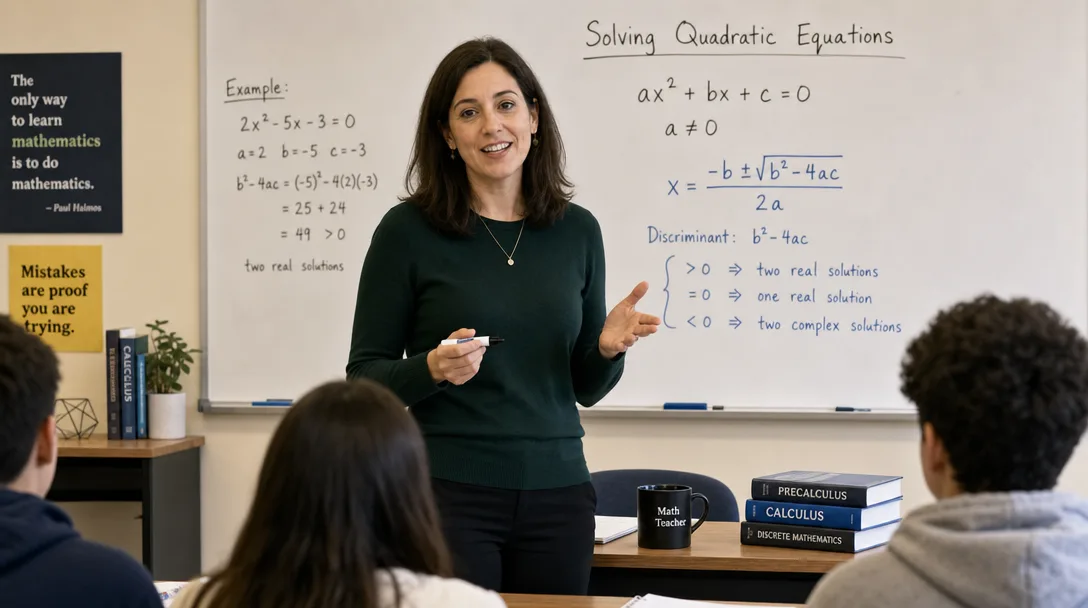
Hello and welcome! I'm so glad you've chosen to take your Mathematics journey seriously — and I'm here to walk every step of it with you. I've spent years teaching ZIMSEC Mathematics, watching students transform from anxious, unsure learners into confident exam candidates, and I've built this course around exactly what works in that process. I know where students get stuck — whether it's factorising quadratics, constructing geometric proofs, or making sense of vectors for the first time — and I've designed each lesson to address those moments head-on. My teaching style is straightforward and practical: I'll always show you the concept, walk you through a worked example, and then give you the chance to try it yourself. Mathematics is not a spectator sport — you have to do it to learn it, and that's what we'll do together. Whether you're in Form 1 taking your first steps or in Form 4 preparing for the big exam, I'm committed to helping you get the grade you deserve. Let's get to work!
— Enstay
Start your journey today
Join get instant access — learn at your own pace with an AI coach in your corner.
$10/mo
Recurring billing · cancel anytime
Enrolling a child? Sign up as a parent — you'll add your student right here after.
Secure checkout · Instant access
- 38 modules, 248 lessons
- AI-adaptive lessons tuned to your level
- Quizzes & checkpoints to lock in progress
- Your own AI learning coach
- Learn on any device, at your pace
- Full access for as long as you're subscribed